

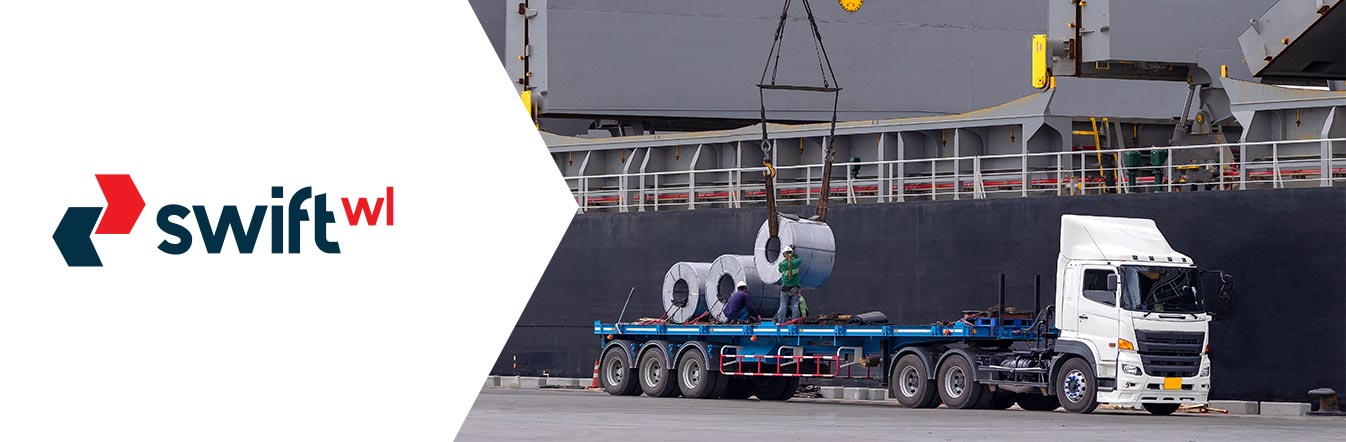
Exporting Steel from South Africa to India: Container or Breakbulk?
Steel coils, plates and structural components don’t always belong in a shipping container. Here’s how to decide which freight solution makes the most sense.
South Africa has an established steel export trade with India, supplying stainless steel, ferroalloys, processed metal products and industrial components.
According to South African Revenue Service (SARS) trade data analysed by Swift Worldwide Logistics, approximately R693 million in iron and steel products was exported from South Africa to India between January and August 2026.
For South African steel producers, manufacturers and trading companies, the opportunity is clear. But choosing the right shipping method can have a significant effect on freight costs, cargo handling and delivery reliability.
Should you ship steel in conventional containers, use flat-racks or consider breakbulk shipping?
The answer depends on what you’re shipping, how much you’re moving and where the cargo needs to go.
1. When Does Container Shipping Make Sense?
Standard shipping containers remain a practical choice for many steel exports.
Smaller steel coils, fabricated components, bundled products and certain steel plates can be transported in containers, provided the cargo’s weight, dimensions and loading arrangements fall within the equipment’s permitted limits.
Container shipping offers several advantages:
- Access to established scheduled shipping services
- Relatively straightforward terminal handling
- Suitable options for smaller export consignments
- Potentially convenient connections to India’s major container ports
- Protection from direct weather exposure when cargo is transported inside a closed container
For exporters shipping relatively small or regular consignments, container shipping may be the most practical solution.
However, steel is particularly dense, which introduces some important considerations.
The Challenge of Heavy Steel Cargo
A container may have sufficient total payload capacity but still be unsuitable for a particular coil or steel product.
Weight distribution across the container floor is essential. A heavy coil concentrates its weight over a relatively small area, potentially creating excessive point loading.
The floor strength, load distribution, securing arrangements, road transport restrictions and carrier acceptance requirements must all be considered.
A shipping method should never be selected on container payload capacity alone.
2. When Should Exporters Consider Breakbulk?
Breakbulk shipping involves loading cargo as individual units or bundles rather than transporting it inside conventional shipping containers.
For steel exporters, this may include:
- Heavy steel coils
- Stainless steel plate
- Large steel sections
- Structural steel beams
- Long steel products
- Large fabricated assemblies
- Consolidated parcels of industrial metal products
Breakbulk can become attractive when the cargo’s size, weight or total shipment quantity makes containerisation less practical.
For example, a manufacturer exporting a substantial quantity of steel coils might find that conventional vessel shipping offers a more suitable cargo-handling arrangement than splitting the shipment across numerous containers.
Similarly, long structural steel sections may be difficult to accommodate in standard containers and could require alternative shipping arrangements.
The important consideration is the shipment as a whole, not simply the dimensions of an individual piece.
The Potential Advantages of Breakbulk
Suitable for larger cargo units: Breakbulk can accommodate products that cannot be safely or practically loaded into standard containers.
Flexibility for consolidated shipments: Large quantities of steel may be shipped together, subject to vessel availability and cargo acceptance.
Alternative cargo handling arrangements: Conventional vessels can offer loading and stowage options suited to certain heavy or long steel products.
Potential cost advantages: For suitable parcels, breakbulk may offer a competitive alternative to using multiple containers.
However, breakbulk does not automatically mean cheaper freight.
Vessel availability, cargo volumes, port handling charges and final delivery requirements all influence the overall cost.
3. What About Flat-Rack Shipping?
Flat-racks provide a third option.
These specialised containers have an open top and sides and are designed to accommodate certain cargoes that cannot fit inside a standard enclosed container.
They may be suitable for:
- Oversized fabricated steel structures
- Long or wide industrial components
- Heavy machinery assemblies
- Steel products exceeding standard container dimensions
Flat-racks allow exporters to use container shipping networks while accommodating certain oversized cargoes.
However, the cargo still needs to comply with the shipping line’s accepted weight, dimensional, load-distribution and securing requirements.
Additional costs may apply for specialised equipment, out-of-gauge dimensions, loading and securing.
For large consignments, it is worth comparing the total cost of multiple flat-racks against an appropriate conventional breakbulk solution.
4. Container vs Breakbulk: Which Is Better?
There is no universal answer.
The following comparison provides a useful starting point.
| Consideration | Container shipping | Breakbulk shipping |
|---|---|---|
| Smaller consignments | Often practical | May be less economical |
| Heavy steel coils | Suitable within approved limits | Worth considering for heavier or larger parcels |
| Long steel sections | Restricted by equipment dimensions | Greater flexibility |
| Large shipment volumes | Multiple containers required | Potential for consolidated parcels |
| Sailing options | Established container networks | Depends on conventional vessel availability |
| Cargo protection | Enclosed-container option | May require additional weather protection |
| Port handling | Standardised container processes | Cargo-specific lifting and securing |
| Freight pricing | Container and special-equipment charges | Parcel, handling and vessel-specific charges |
For exporters, the most useful approach is to compare actual shipping options rather than assume that one method is always preferable.
A small consignment of stainless steel products may be ideal for container shipping.
A large, consolidated shipment of heavy coils or structural steel may justify investigating breakbulk.
The right decision requires both a commercial and operational assessment.
5. Steel Coils Require Particular Care
Steel coils present specific handling challenges because of their weight, shape and tendency to move if incorrectly secured.
Whether coils travel in containers or on conventional vessels, careful planning is essential.
Important considerations include:
Weight distribution: The supporting structure must safely accommodate the weight of each coil.
Securing: Coils require appropriate arrangements to prevent movement during road and sea transport.
Lifting: Suitable lifting equipment and handling methods must be used to avoid damage.
Surface protection: Stainless, coated and finished steel products may require particular attention to moisture, contamination and mechanical damage.
Cargo condition: Clear records of the cargo’s condition before loading can help identify damage and support any subsequent claims.
Steel coils are valuable industrial products. Damage caused by inadequate handling or securing can create substantial commercial consequences.
Experienced cargo handling and an appropriate shipping plan are therefore essential.
6. Shipping Steel from Durban to India
Durban is an important export gateway for South African manufacturers and industrial suppliers.
For exporters based in Gauteng, Mpumalanga and other inland manufacturing regions, the logistics process may involve several stages:
- Collection from the factory or warehouse
- Inland transport to Durban
- Receiving, inspection or staging where required
- Export customs clearance
- Delivery to the appropriate port terminal
- Cargo loading and ocean freight
- Discharge and onward arrangements in India
Swift Worldwide Logistics can coordinate these elements as part of an integrated freight solution.
Which Indian Ports Should You Consider?
Potential destinations on India’s western coast include:
Mundra: A major commercial gateway serving Gujarat and northern India’s industrial markets.
Kandla / Deendayal Port: An established port handling a range of commercial and industrial cargoes.
Hazira: A port serving Gujarat’s industrial and manufacturing sectors.
Mumbai: A commercial gateway with access to manufacturing and distribution markets.
The appropriate port depends on the cargo, shipping service, handling facilities and final delivery destination.
For steel cargo, the availability of suitable unloading and handling equipment should be confirmed before selecting the destination.
7. What Determines the Cost of Shipping Steel to India?
Ocean freight is only one component of the total shipping cost.
A meaningful comparison should include:
Inland Transport
The cost of collecting steel from the manufacturing facility and transporting it to Durban.
Heavy cargo may require particular attention to legal axle loads, vehicle selection and loading arrangements.
Loading and Cargo Securing
Steel coils, bundles and fabricated products may require specialised handling, cradles, dunnage, lifting equipment or securing arrangements.
Port Handling
Receiving charges, terminal handling, storage and loading costs can vary depending on the shipping method and terminal.
Ocean Freight
Container rates, flat-rack charges and conventional vessel freight are calculated differently.
Breakbulk quotations will often depend on the cargo’s weight, dimensions, stowage requirements and available vessel capacity.
Destination Charges
Indian port handling, discharge, storage and onward delivery costs can materially influence the overall shipping decision.
The cheapest ocean freight quotation is not always the cheapest shipping solution.
Exporters should compare the total logistics cost, the suitability of the handling arrangements and the expected delivery schedule.
8. What Information Does Swift Need to Quote?
Steel exporters can help the quotation process by providing accurate cargo information.
| Information | Details required |
|---|---|
| Product | Steel coils, plate, beams or fabricated structures |
| Quantity | Total tonnage and number of units |
| Unit weights | Weight of each coil, bundle or cargo piece |
| Dimensions | Length, width and height of each unit |
| Packaging | Loose, bundled, crated or on skids |
| Collection location | Factory, warehouse or loading site |
| Destination | Indian port or final delivery address |
| Cargo-ready date | Expected availability for collection |
| Handling requirements | Lifting points, coil orientation and any special instructions |
For steel coils, individual coil weights, outside diameters, widths and packaging details are particularly important.
For structural steel, the maximum length of individual pieces and the weight of each bundle should be supplied.
This information allows the forwarding team to determine whether standard containers, flat-racks or breakbulk arrangements should be investigated.
9. Already Exporting Steel to India?
If your business regularly exports steel or manufactured metal products to India, it may be worth reviewing your existing freight arrangements.
Shipment volumes change. Freight markets change. And the most practical shipping solution for one consignment may not be the most competitive for another.
Swift Worldwide Logistics can help exporters evaluate different freight options from Durban to India.
Our capabilities include:
- Inland collection and transport
- Warehousing and cargo receiving
- Export customs clearance
- Port delivery and handling coordination
- Container, flat-rack and breakbulk freight arrangements
- Shipment monitoring and communication
Whether you’re exporting stainless steel coils, fabricated steel structures or large consignments of industrial metal products, we’d welcome the opportunity to review your requirements.
Let’s Talk About Your Next Steel Shipment
Already shipping steel to India? Let’s see if there’s a better way to move it.
Send us the details of your next shipment, including the product, quantity, weights, dimensions and destination.
We’ll investigate suitable shipping options and help you compare the alternatives.
Swift Worldwide Logistics
Big cargo. New opportunities.